
ntroduction
In today’s fast-paced digital landscape, businesses that rely on manual marketing processes are quickly falling behind. Customers expect personalized, real-time experiences—and delivering that at scale is nearly impossible without automation.
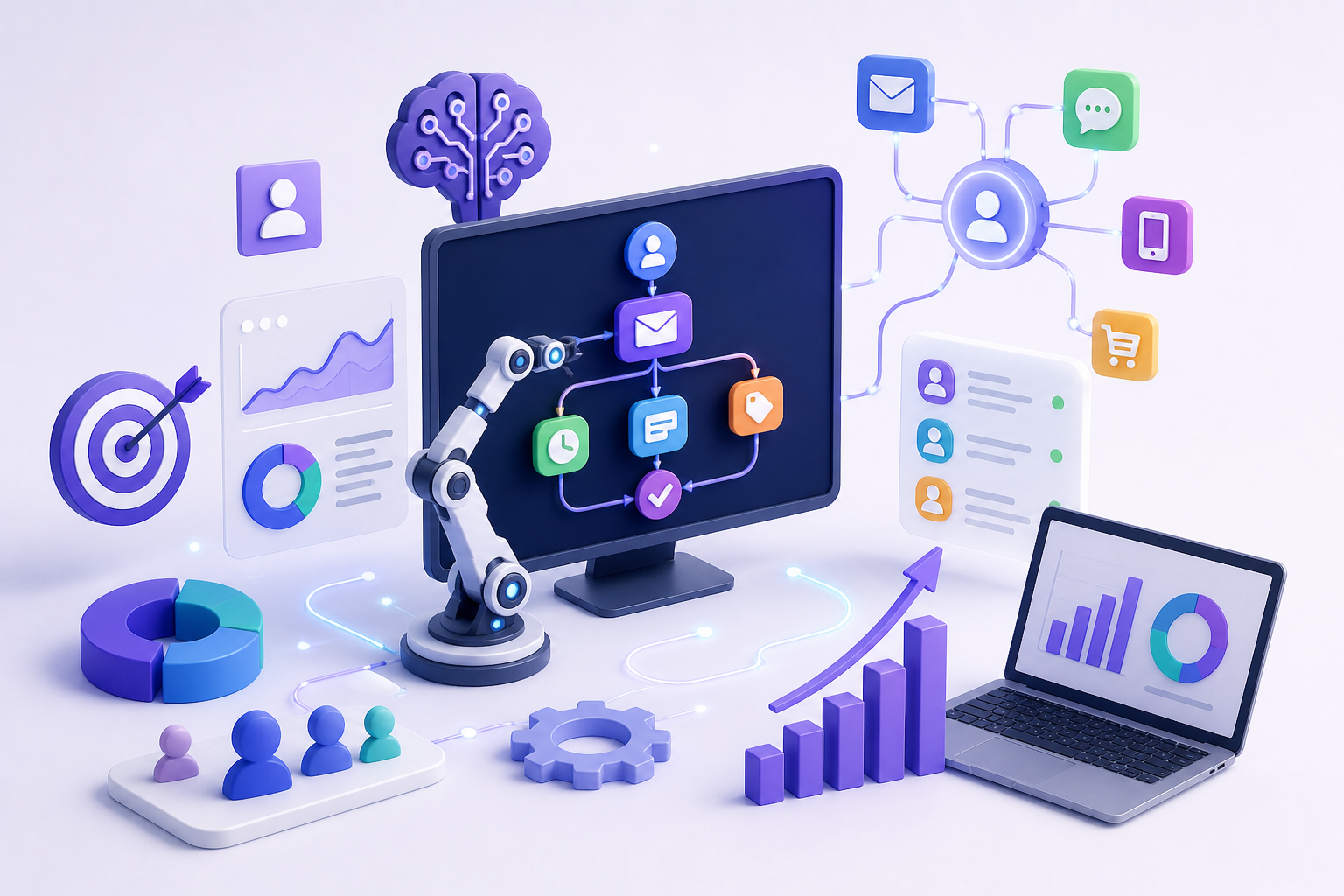
This is why understanding marketing automation trends 2026 is critical for growth. From AI-driven personalization to omnichannel automation, modern businesses are leveraging advanced technologies to streamline operations and boost conversions.
In this guide, we’ll explore the top marketing automation trends, tools, and strategies every business must adopt to stay competitive in 2026.
Why Marketing Automation is Essential in 2026
Marketing automation is no longer a luxury—it’s a necessity. Businesses today are dealing with:
- Increasing competition
- Higher customer expectations
- Data overload
By implementing marketing automation tools, companies can automate repetitive tasks like email campaigns, lead nurturing, and customer segmentation.
This not only saves time but also improves efficiency and ROI. More importantly, automation enables businesses to deliver highly personalized experiences, which is key to modern digital marketing success.
Top Marketing Automation Trends
AI-Driven Personalization
One of the biggest marketing automation trends in 2026 is AI-driven personalization. AI analyzes user behavior, preferences, and interactions to deliver highly relevant content.
Instead of generic campaigns, businesses can now create tailored experiences for each user, improving engagement and conversions.
Keyword usage: AI personalization, automated marketing campaigns
Omnichannel Automation
Customers interact with brands across multiple platforms—email, social media, websites, and more. Omnichannel automation ensures a seamless experience across all touchpoints.
For example, a user who clicks an email can be automatically retargeted on social media with relevant ads.
Keyword usage: omnichannel marketing automation, cross-channel automation
No-Code Automation Tools
No-code tools are making automation accessible to everyone—not just developers. These platforms allow marketers to build workflows without technical knowledge.
This trend is empowering small and medium businesses to adopt marketing automation strategies quickly and efficiently.
Keyword usage: no-code automation tools, marketing workflow automation
CRM + Automation Integration
Integrating CRM systems with automation tools is becoming a standard practice. This allows businesses to:
- Track customer interactions
- Automate follow-ups
- Improve lead management
This integration ensures a smooth flow of data, enhancing both marketing and sales performance.
Keyword usage: CRM automation integration, customer lifecycle automation
Best Marketing Automation Tools
Here are some of the top marketing automation tools in 2026:
- HubSpot – All-in-one CRM and automation platform
- ActiveCampaign – Email automation and customer experience platform
- Marketo – Advanced marketing automation for enterprises
- Zapier – No-code automation tool for workflow integration
- Mailchimp – Email marketing and automation platform
These tools help businesses implement powerful automated marketing campaigns with ease.
How to Implement Automation in Your Business
Step 1: Define Your Goals
Start by identifying what you want to achieve:
- Lead generation
- Customer retention
- Sales growth
Clear goals will guide your automation strategy.
Step 2: Choose the Right Tools
Select tools based on your business size and needs. For example:
- Small businesses → No-code tools
- Enterprises → Advanced CRM platforms
Step 3: Build Automated Workflows
Create workflows for:
- Email campaigns
- Lead nurturing
- Customer onboarding
This ensures consistent and efficient communication.
Step 4: Analyze and Optimize
Use analytics to measure performance and improve your campaigns. Key metrics include:
- Open rates
- Conversion rates
- Customer engagement
Benefits of Marketing Automation
Implementing marketing automation strategies offers multiple benefits:
- Increased efficiency: Automates repetitive tasks
- Better targeting: Uses data-driven insights
- Higher ROI: Improves campaign performance
- Scalability: Handles large audiences easily
- Enhanced customer experience: Delivers personalized interactions
FAQ
- What is marketing automation?
Marketing automation refers to using software and technology to automate marketing tasks like email campaigns, lead nurturing, and customer segmentation.
- What are the top marketing automation trends in 2026?
Key trends include AI-driven personalization, omnichannel automation, and no-code automation tools.
- Which tools are best for marketing automation?
Popular tools include HubSpot, ActiveCampaign, Marketo, and Zapier.
- Is marketing automation suitable for small businesses?
Yes, with the rise of no-code automation tools, even small businesses can implement automation بسهولة and cost-effectively.
- How does automation improve ROI?
Automation reduces manual effort, improves targeting, and increases conversion rates, leading to higher ROI.
Conclusion
Marketing automation is transforming how businesses connect with customers. By adopting the latest marketing automation trends 2026, companies can streamline operations, improve personalization, and drive better results.
If you want to scale your business and stay ahead of the competition, now is the time to invest in marketing automation tools and strategies.
Ready to automate your marketing and boost ROI? Get started today with the right tools and strategy.

Robor
May 20, 2025 5:18 amOur AI agency is a cutting-edge technology partner that specializes in delivering artificial intelligence solutions to help businesses streamline operations
Robor
May 20, 2025 5:19 amBy leveraging the power of AI, we aim to revolutionize industries and empower organizations to stay competitive in a rapidly evolving digital landscape.
Robor
May 20, 2025 5:21 amTo be a leading AI agency recognized for creating intelligent solutions that drive meaningful change across industries, fostering smarter decision-making,