

Introduction
In today’s competitive digital landscape, attracting traffic is no longer the biggest challenge—converting that traffic into paying customers is. Many businesses struggle because they lack a structured and optimized funnel.
A well-designed high-converting sales funnel guides potential customers through a journey—from awareness to purchase—using strategic messaging and automation.
In this guide, you’ll learn how to build a sales funnel in 2026 that maximizes conversions, along with tools, strategies, and common mistakes to avoid.
What is a Sales Funnel?
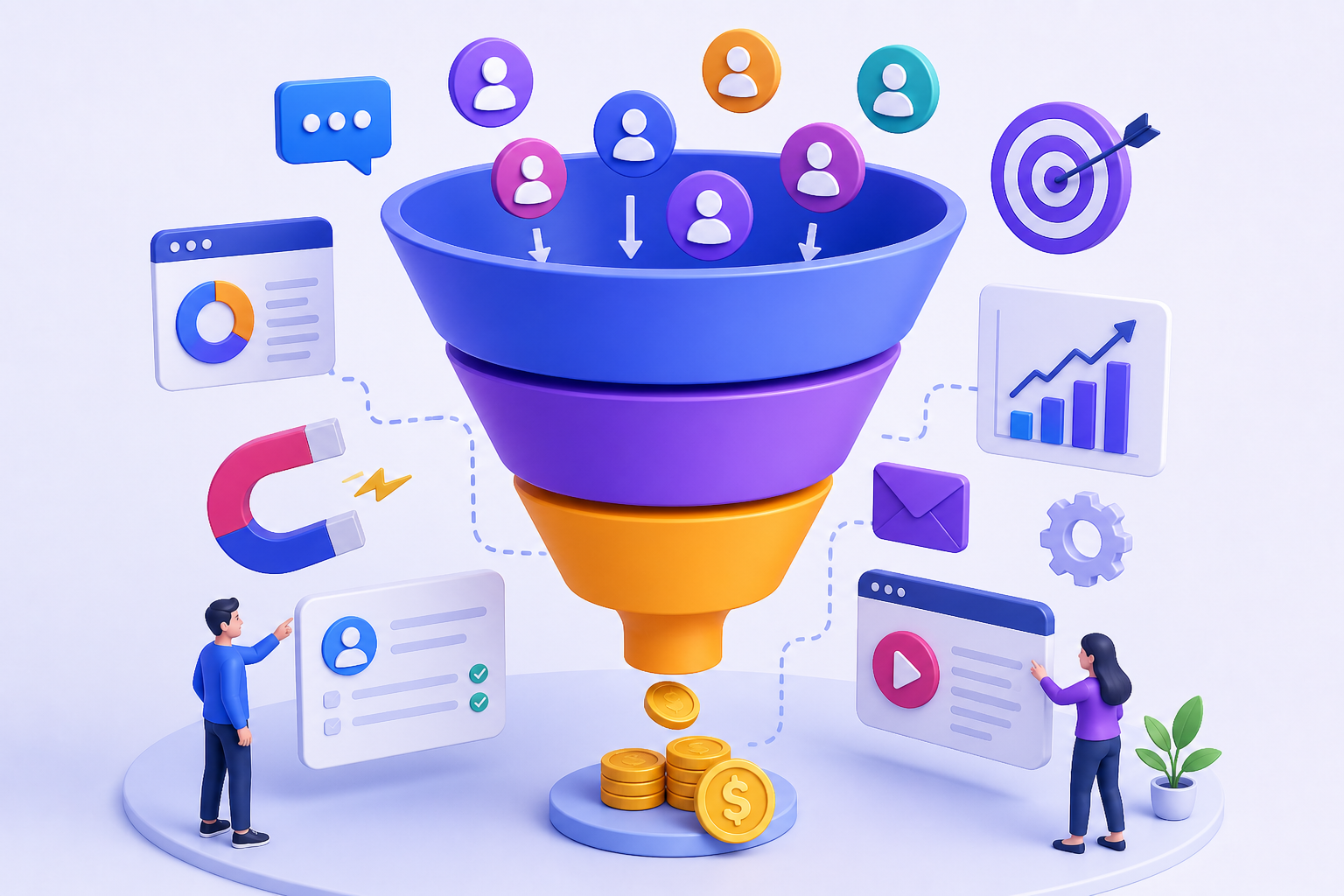
A sales funnel is a step-by-step process that moves potential customers from discovering your brand to making a purchase.
It typically includes multiple touchpoints such as:
- Landing pages
- Email campaigns
- Retargeting ads
The goal is to guide users through each stage while building trust and increasing the likelihood of conversion.
A well-optimized conversion funnel ensures that no potential customer is lost during the journey.
Stages of a High-Converting Funnel
Awareness Stage
At this stage, your goal is to attract attention and bring users into your funnel. Common strategies include:
- Content marketing (blogs, videos)
- Social media campaigns
- Paid ads
Here, the focus is on visibility and generating interest using top-of-funnel marketing strategies.
Consideration Stage
In the consideration stage, users evaluate your product or service. You should provide value through:
- Email nurturing campaigns
- Case studies
- Free resources (ebooks, webinars)
This is where lead nurturing becomes critical for building trust and engagement.
Conversion Stage
This is the final stage where users take action—such as making a purchase or booking a call.
Key elements include:
- Strong CTAs
- Optimized landing pages
- Limited-time offers
A well-optimized conversion rate optimization (CRO) strategy can significantly increase your results at this stage.
Step-by-Step Funnel Building Process
Step 1: Define Your Audience
Understanding your audience is the foundation of a successful funnel. Identify:
- Pain points
- Goals
- Buying behavior
This helps create targeted messaging that resonates with your ideal customers.
Step 2: Create a High-Converting Landing Page Your landing page is where conversions happen. Key elements include:
- Clear headline
- Strong value proposition
- Compelling CTA
- Social proof
An optimized landing page is essential for improving your conversion rate.
Step 3: Add Automation
Automation ensures your funnel runs efficiently without manual effort.
Use tools to:
- Send follow-up emails
- Segment leads
- Trigger actions based on behavior
This enhances your automated sales funnel performance.
Step 4: Optimize Conversions
Continuously test and improve your funnel using:
- A/B testing
- Analytics
- User feedback
Optimization is key to building a high-converting funnel that delivers consistent results.
Tools for Funnel Building
Here are some popular sales funnel tools:
- ClickFunnels – Funnel builder and automation platform
- Kartra – All-in-one marketing and funnel solution
- Leadpages – Landing page builder
- HubSpot – CRM and automation platform
- Unbounce – Conversion-focused landing pages
These tools help streamline funnel creation and improve performance.
Common Funnel Mistakes
Avoid these common mistakes when building your funnel:
- Not understanding your target audience
- Weak or unclear CTAs
- Poor landing page design
- Lack of follow-up
- Ignoring data and analytics
Fixing these issues can dramatically improve your sales funnel conversion rate.
FAQ
- What is a high-converting sales funnel?
A high-converting sales funnel is a structured process designed to maximize the number of users who take a desired action, such as making a purchase.
- How many stages are in a sales funnel?
Typically, a funnel has three main stages: awareness, consideration, and conversion.
- What tools are best for building sales funnels?
Tools like ClickFunnels, Kartra, and HubSpot are widely used for building and optimizing funnels.
- How can I improve my funnel conversion rate?
Use A/B testing, personalization, and strong CTAs to optimize your funnel.
- Is automation necessary for sales funnels?
Yes, automation improves efficiency, ensures timely follow-ups, and enhances user experience.
Conclusion + CTA
A well-structured sales funnel in 2026 is essential for turning visitors into customers. By understanding your audience, optimizing each stage, and leveraging automation, you can significantly increase conversions and revenue.
The key is continuous improvement—test, analyze, and refine your funnel to achieve the best results.
Want to build a high-converting sales funnel for your business? Start optimizing today and turn more leads into customers.

Robor
May 20, 2025 5:18 amOur AI agency is a cutting-edge technology partner that specializes in delivering artificial intelligence solutions to help businesses streamline operations
Robor
May 20, 2025 5:19 amBy leveraging the power of AI, we aim to revolutionize industries and empower organizations to stay competitive in a rapidly evolving digital landscape.
Robor
May 20, 2025 5:21 amTo be a leading AI agency recognized for creating intelligent solutions that drive meaningful change across industries, fostering smarter decision-making,